

Businesses often compare SEO and PPC to understand which marketing channel delivers stronger results, higher conversions, and a better long-term return. Both are powerful tools for lead generation, but they work in very different ways. SEO focuses on earning visibility in organic search results, while PPC places paid ads at the top of search pages. Each has its own strengths, cost structure, and impact on sales. Understanding these differences makes it easier to decide which strategy fits your goals.
This article breaks down how both channels influence leads and sales, what data suggests about performance trends, and how companies can combine them for stronger results. It also includes long-tail and semantic search phrases throughout the text such as organic traffic vs paid traffic, SEO conversions vs PPC conversions, and search intent in lead generation to improve clarity and topical depth.
Search Engine Optimization is a long-term strategy that helps a website appear naturally in search results. When your pages match what customers want, you earn higher organic visibility without paying for each click. SEO often attracts users who are researching or comparing solutions, which can lead to consistent lead growth.
SEO performance increases gradually because search engines need time to trust a website. As rankings improve, traffic grows without rising costs. This leads to a lower cost per lead compared to paid search ads. Many businesses choose SEO for its ability to build authority, strengthen brand presence, and support content that continues to generate leads for months or even years.
Another strength of SEO is its connection to search intent. Users who find you through organic search often show higher engagement, spend more time on the site, and convert at a stable rate. Although SEO needs ongoing updates and technical improvements, it remains one of the most reliable channels for future sales growth.
Pay-Per-Click advertising offers a direct path to quick visibility. Businesses pay for each click on their ads, ensuring their message appears above organic results. PPC is ideal when you need leads right away, such as during product launches, webinars, promotions, or seasonal sales cycles.
Because ads can target specific keywords, locations, and audience segments, PPC provides tight control over who sees your message. This precision helps businesses reach buyers with strong purchase intent. When users click a paid ad, they often have clear needs, giving PPC strong potential for high immediate conversions.
However, PPC performance depends heavily on budget and bidding. Competitive keywords can raise the cost per click, and traffic stops the moment the budget ends. Unlike SEO, PPC does not build lasting authority. It is effective, but the investment must be continuous to maintain results.
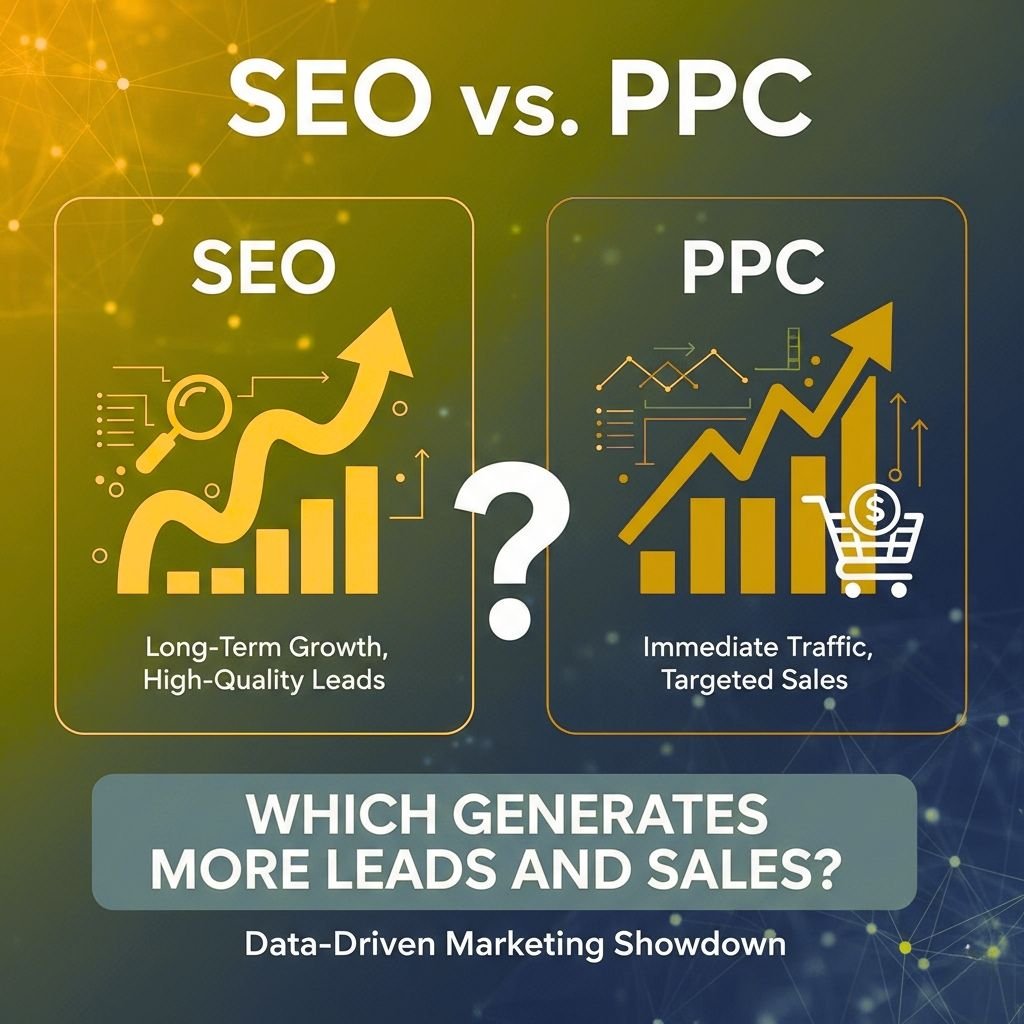
The comparison of SEO vs. PPC for leads and sales is not always straightforward. SEO delivers long-term value with consistent growth, while PPC brings quick wins and predictable visibility. Many companies find that organic search generates a larger volume of leads over time because it attracts a wide range of users across the entire customer journey. PPC, meanwhile, often captures users who are ready to act, producing faster conversions and immediate sales opportunities.
Conversion behavior also differs. Organic search visitors tend to interact more deeply with content and return multiple times before converting. Paid search visitors convert faster but rely on clear landing pages and persuasive messages. Cost is another major factor. SEO becomes more affordable as rankings improve, while PPC requires steady investment.
The best channel often depends on timing. If your goal is long-term influence, SEO usually leads. If your goal is speed, PPC usually wins. A strong marketing plan often includes both, blending long-term growth with short-term lead generation.
SEO is an excellent choice for companies that want sustainable growth without rising ad costs. It supports blogs, guides, and service pages that answer user questions and build trust. Businesses that invest consistently in SEO often see their cost per lead drop substantially as traffic increases.
PPC is ideal for companies that need instant pipeline growth or operate in competitive markets. When keywords are difficult to rank for organically, PPC provides immediate access to the search audience. It is also effective for campaigns targeting specific demographics or geographic areas.
Many organizations use a hybrid strategy because it balances the strengths of each channel. PPC provides fast results while SEO builds long-lasting authority. Data gathered from PPC campaigns—such as converting keywords and audience behavior—can improve SEO planning. Meanwhile, strong SEO can lower dependence on high-cost ads.
Measuring the performance of both channels requires tracking conversions, click behavior, and cost. For PPC, businesses monitor metrics such as cost per click, cost per acquisition, click-through rate, and return on ad spend. These numbers show how efficiently ads produce leads and whether budget adjustments are needed.
SEO metrics include organic traffic, keyword positions, engagement levels, and conversion rate from search visitors. The ROI of SEO improves as rankings solidify and traffic grows without additional cost.
When both channels are measured together, you gain a clear picture of how users move through the buying journey. Many companies discover that SEO and PPC support each other rather than compete.
The answer depends on your goals, timeline, and budget. SEO generally produces more leads and stronger long-term sales because organic visibility compounds over time. PPC generates faster results and is ideal for campaigns that need immediate impact. When used together, businesses achieve the strongest mix of long-term and short-term performance. The most effective strategy often blends both channels to reach users at different stages of the decision process.